 HIFU Treatment
Non-Surgical Skin Tightening
HIFU Treatment
Non-Surgical Skin Tightening
HIFU Treatment
Non-Surgical Skin Tightening
HIFU Treatment
Non-Surgical Skin Tightening
A calm, effective approach to firmer, smoother skin — using precision ultrasound technology that works beneath the surface, without incisions, needles, or downtime.
Eventually you look at yourself — maybe in a shop window, maybe on a video call — and something looks off. Not dramatically different. Enough to give you pause. Your skin around your jawline is not as tight, and may even droop just a little. The creases in the corners of your eyes look deeper than you recall. You still haven't caught up with the story your neck is telling. It's not vanity. It's just noticing. And once you realise what this means to your body, then you start really asking yourself — what can I do without undergoing a surgical procedure?
Enter HIFU treatment, or high-intensity focused ultrasound — a non-surgical cosmetic procedure that has quietly climbed to one of the most popular procedures on the market. This technologically advanced procedure uses precision ultrasound energy delivered deep below the skin's surface to tighten, tone and lift — without so much as a single incision, needle or night recovering in bed. The technology itself has been utilised in medicine for over twenty years, but its aesthetic usage has truly revolutionised the possibilities for a fresher and more sculpted look without the risks or downtime associated with surgery.
The answer as to what makes HIFU treatment stand out from the dozens of other available skin-tightening alternatives lies in the regions on which it works. The majority of non-invasive treatments only penetrate the outer layers of skin. HIFU reaches deeper — to the same tissue plane that a surgeon would target with facelift surgery. That is how marked the results are. You are not only treating the surface. What you are doing is stimulating a response in the deep layer of skin which will cause authentic tightening and new collagen formation over time, across weeks and months.
Whether you are hoping to sharpen a softening jawline, smooth out lines across your forehead, tighten loose skin on your neck or even firm excess areas of the body — such as the stomach or upper arms — then HIFU treatment may well be what you are looking for. It is suitable for both men and women, can be performed on all skin types and tones, and takes less than one hour to complete the whole session without downtime. You get in, you receive the treatment and you go on with your day. It really is that straightforward.
If you want to understand why HIFU treatment works, the underlying processes taking place under your skin during treatment can help a great deal. No worries — you do not need a medical degree. The fundamentals are deceptively simple when they are properly laid out.
It focuses ultrasound energy, the same type of energy used in medical imaging, but at a much greater intensity, delivered in small pinpointed areas beneath the skin. Consider it like applying a magnifying glass to align sunlight in a singular point. The ultrasound beams traverse the skin and begin moving inwards, meeting at a point deep beneath the surface where they form tiny points of heat energy. These thermal coagulation points are the foundation of everything HIFU does.
At the right depth, these microscopic little points of heat are created and they almost instantaneously cause the tissue to contract and tighten. But even more importantly, that controlled thermal injury is also able to engage the body's natural healing response. Your body registers the micro-damage and gets to work producing new collagen and elastin — both of which are two proteins that keep skin tight, smooth, and intact. This process does not happen overnight. Effects continue to build over the next few weeks and months, which is why HIFU results are gradual onset following treatment rather than all or nothing.
How deep can HIFU go compared to other energy-based treatments? Various cartridges, sometimes called transducers, are used in the procedure, which transmit energy at different depths into the skin. Standard depths are 1.5mm, 3.0mm and 4.5mm. Each targets a different layer. The 1.5mm cartridge penetrates the superficial dermis and is beneficial for fine lines and surface texture of skin. The 3.0mm cartridge penetrates more deeply to give collagen formation on a more structural level in the deeper dermis. The 4.5mm cartridge — this one is really significant — goes all the way to the SMAS layer for lifting.
SMAS stands for the superficial muscular aponeurotic system. It is a layer of connective tissue that exists between the deeper facial muscles and the fat and skin above them. It is the same layer that plastic surgeons tighten in a traditional facelift. The reason HIFU is able to reach it without any cutting is why this non-surgical option brings such comparable results. It is an internal lift fuelled solely by your own collagen reaction, giving you a structural lift from the inside out.
Based on the area being treated and your unique skin condition, the practitioner performing your treatment will select the appropriate cartridge depths. There are certain areas of the face requiring all three depths. Some may only require one or two. This is a part of what makes HIFU treatment so versatile — it has never been a one-size-fits-all treatment. The best practitioner will look at your skin, talk about what you want to achieve and plan exactly where the energy should be delivered most effectively.
Ageing begins to show in the face before anywhere else, and this is where most people first notice their mature appearance. HIFU treatment often provides noticeable and satisfying results here. On the face, skin laxity emerges slowly — a hint of softness along the jawline, a touch of heaviness around the brows and some deeper folds running from nose to mouth corners. These changes occur because collagen and elastin that used to keep everything tight start to degrade with age, and gravity does the rest. HIFU counters both of those forces by rebuilding structural support from underneath the surface.
Beginning with the areas at the top of the face, the forehead is a very common treatment area for cosmetic interventions. Many people experience some form of horizontal lines across the forehead and vertical frown lines between the brows as among the first visible signs of ageing. HIFU treatment can smooth and tighten the skin in this area, softening those lines without freezing facial expression the way injectable treatments can sometimes do. There is a difference between skin that has been paralysed into smoothness and skin that truly appears firmer and more toned. HIFU delivers the latter.
Moving further down, the eye area responds well to treatment. The fine lines known as crow's feet — the small, fanned out lines present at the corners of the eyes — can be greatly softened. Even more, the brow itself can be lifted by HIFU. Lifting the eyebrows by several millimetres is enough to open the eye up and freshen a face considerably. It is just one of those changes that anyone can notice without being able to identify quite what has changed. You just look more rested.
Volume loss and sagging in the cheeks and mid-face are oftentimes the most obvious visual changes, as this area tends to show it early. The fat pads of the cheeks lose volume, and the skin above begins to sag, which together causes an appearance of flatness in the mid-face and deepens the nasolabial folds — those lines that go from the side of the nose down to the corner of the mouth. HIFU treatment lifts the skin on the cheeks and mildly tightens the mid-face, which helps soften those deeper grooves. It does not fill them like a dermal filler would, but it treats the underlying laxity that is causing them to become deep in the first place.
HIFU treatment produces perhaps the most dramatic distinction along the jawline. A strong jawline is one of those features that reads as youthful immediately, and it is perhaps the first thing to become blurred as skin loosens with age. The extra softness in the lower jaw area, the formation of jowls, the additional weight that gravity brings. HIFU tightens the tissue along the jawline and can also provide a lift to nascent jowls, restoring a cleaner, more defined profile. This is typically the area that has the most dramatic impact for those who feel loose tissue in their face.
HIFU also targets double chins, which are another common complaint. In the submental area, it tightens the skin and at deeper energy settings disrupts and reduces stubborn fat deposits under the chin. This results in a slimmer chin and neck profile.
As for the neck, this is one of the first places to show age but is so often ignored in skincare. There are fewer oil glands to lubricate the neck, and the skin here is thinner, which causes it to lose elasticity more rapidly. HIFU treatment targets horizontal neck lines, vertical banding and general crepiness. It additionally creates a sleek transition from jawline downward that relatively enhances the entire appearance of the face.
And now, the décolletage — the chest area — is increasingly sought as a treatment zone. Crepey, lined skin across the chest is caused by sun damage, sleeping positions and the natural ageing process. For a more complete refresh, HIFU can be used to tighten and rejuvenate the upper chest, making it a natural complement to any facial treatment.
The face and neck are often in the spotlight, but there are many body areas where HIFU treatment is just as effective. The same ultrasound technology is still in place, but cartridges and energy depths have been adjusted to accommodate the thicker skin and different tissue composition on the body.
One of the most common treatment areas is the upper arms. Loose, saggy skin on the backs of the upper arms is a widespread annoyance, particularly for women over forty. It is often a question of skin laxity rather than muscle tone, so exercise alone does not always work with this area. HIFU tightens the skin here to help them look more toned and defined.
Another important area of the body is the stomach and abdomen. It can assist in a range of conditions — from skin laxity after childbirth, to age-related loosening, to those with stubborn fatty bulges that will not shift despite diet and exercise. At a higher energy setting, the treatment both targets fat cells with the ultrasound waves and also helps to tighten skin, effectively resulting in a dual body contouring effect. For those who are at or near their goal weight and unable to tighten skin on its own, it can be remarkably successful — though it comes nowhere close to being a substitute for major weight loss.
The thighs — inner and outer — also respond well to HIFU. Skin laxity of inner thighs is an ageing concern that often arises, and fat tends to sit in those stubborn pockets on the outer thighs and hips. HIFU treatment targets both the skin tightening and fat deposits to produce a more contoured and smooth result.
Treatment can also extend to the back and buttocks. HIFU will tighten the skin on the back — especially on the lower back and around the bra-line area — and address sagging skin on the buttocks. These are not common areas people think to enquire about, but the outcomes can be considerable, especially for those who have gone through weight changes or natural ageing in these locations.
Intimate tightening is a more specialised application of HIFU technology for the body. HIFU can be used for vaginal rejuvenation — tightening and toning the vaginal tissue using an ultrasound device specifically designed for this purpose. Women who develop laxity postpartum or from the ageing process may seek this treatment. A non-surgical procedure, it can enhance comfort and confidence and uses the same ultrasound technology as facial treatments but is adjusted in intensity to suit the delicate tissue involved.
One of the most common questions people have is whether HIFU treatment is right for them. The short answer is that it works for a great many people, but it is not a universal solution, and any reputable practitioner would be transparent about that.
HIFU can act as a preventive measure in this age group. The skin remains relatively taut and collagen production is still reasonably vigorous at this stage in life, but the very earliest signs of ageing may already have started to present — perhaps a little softening about the jawline or some fine lines beginning to appear. At this stage, a HIFU treatment is able to encourage new collagen production and keep the skin firm before more noticeable changes occur. It is like staying ahead of the curve instead of catching up.
Most HIFU treatments are best suited to patients in this age range. It is at this point that most people start to notice significant alterations — discernable lines, an undefined jawline, sagging around the eyes and cheeks, and loosening neck skin. At this age, collagen production has slowed significantly and the structural support within the skin dermis is starting to decline. This is where HIFU truly comes into its own, as it acts directly at addressing these complaints by stimulating the production of new collagen from the deepest layers, effectively resetting part of the clock.
HIFU has significant results even in people over sixty, but expectations must be realistic. People who have very severe skin laxity — especially if that has developed over many years — are likely best suited to a surgical option. But HIFU provides a real solution for those in this age group who may not want surgery. Visible lift, noticeably firmer skin, softer lines, and a refreshed overall appearance. It is also ideal for people who have had surgical work done previously but want to maintain or extend those results without going under the knife again.
HIFU treatment is safe for all skin types and all skin tones. Because it uses ultrasound-based technology, it is not influenced by skin colour — unlike some laser treatments, which pose a greater risk of pigmentation changes on darker skin. This makes it an appropriate option for nearly anyone.
There are some situations where HIFU may not be ideally suited. It is not recommended during pregnancy or breastfeeding. Anyone with skin infections, open wounds, or active acne in the treatment area should have those conditions cleared before proceeding. People with metal implants or electronic devices in the treatment area may similarly be contraindicated. Anyone with a condition that affects wound healing or collagen production should see a practitioner for a thorough consultation beforehand.
After all, the most important thing is to have realistic expectations. HIFU gives you tangible, visual results — but they are gradual and natural, not instantaneous transformations. For patients who want a fresh, firm appearance with natural definition that builds week after week and month after month, HIFU is an ideal option.
It is perfectly normal to feel a little uncertain the first time you walk into any cosmetic procedure. Knowing exactly what happens — step by step — simply makes it that much more comfortable.
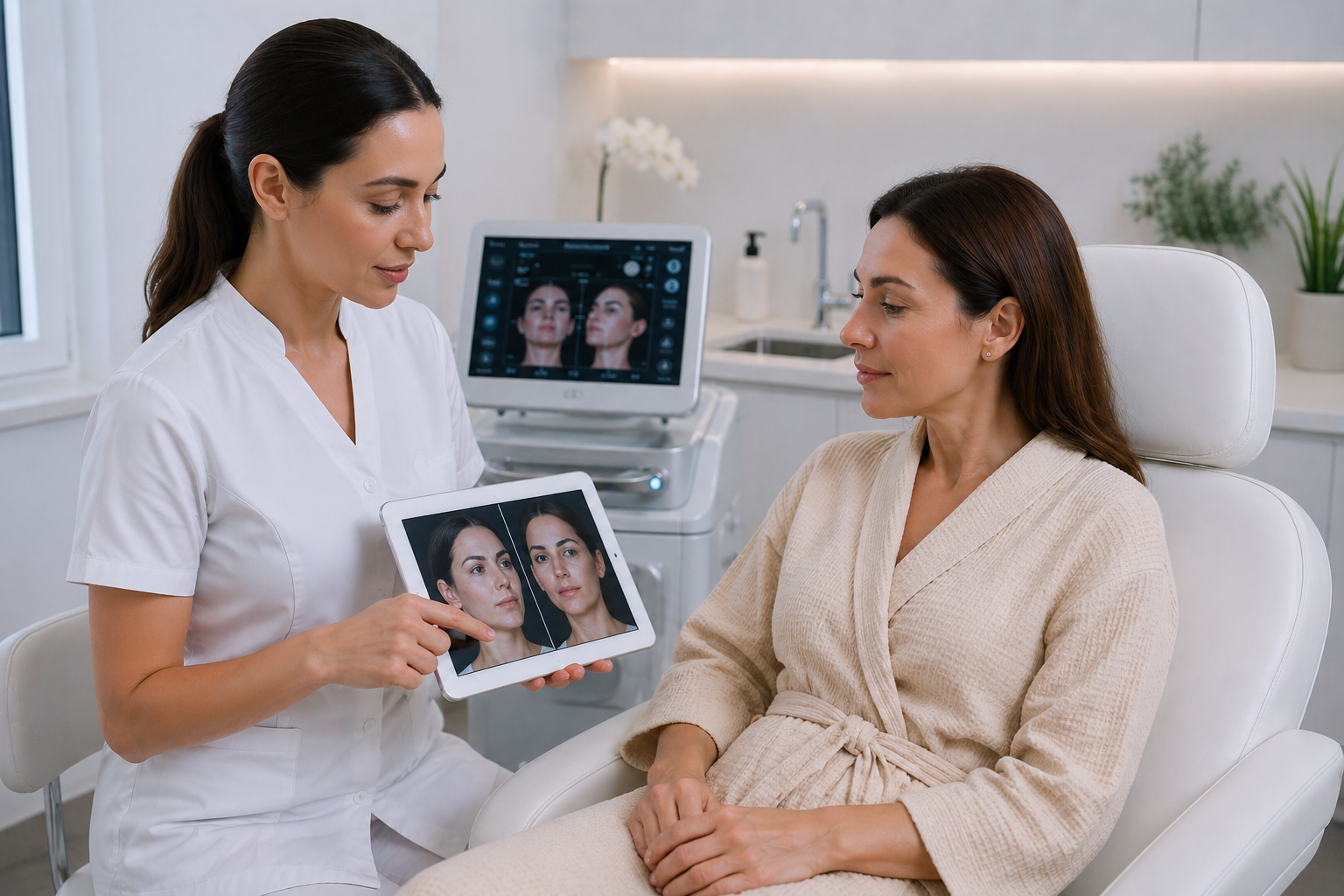
Everything starts with a consultation. A good practitioner will examine your skin, talk you through your concerns and goals, and then suggest a tailored treatment plan. This is not some five-minute box-ticking exercise. It is a proper discussion about what areas will be treated, how many sessions are likely required, and the achievable outcomes. If a practitioner does not take the time to do this properly, that is a significant red flag.
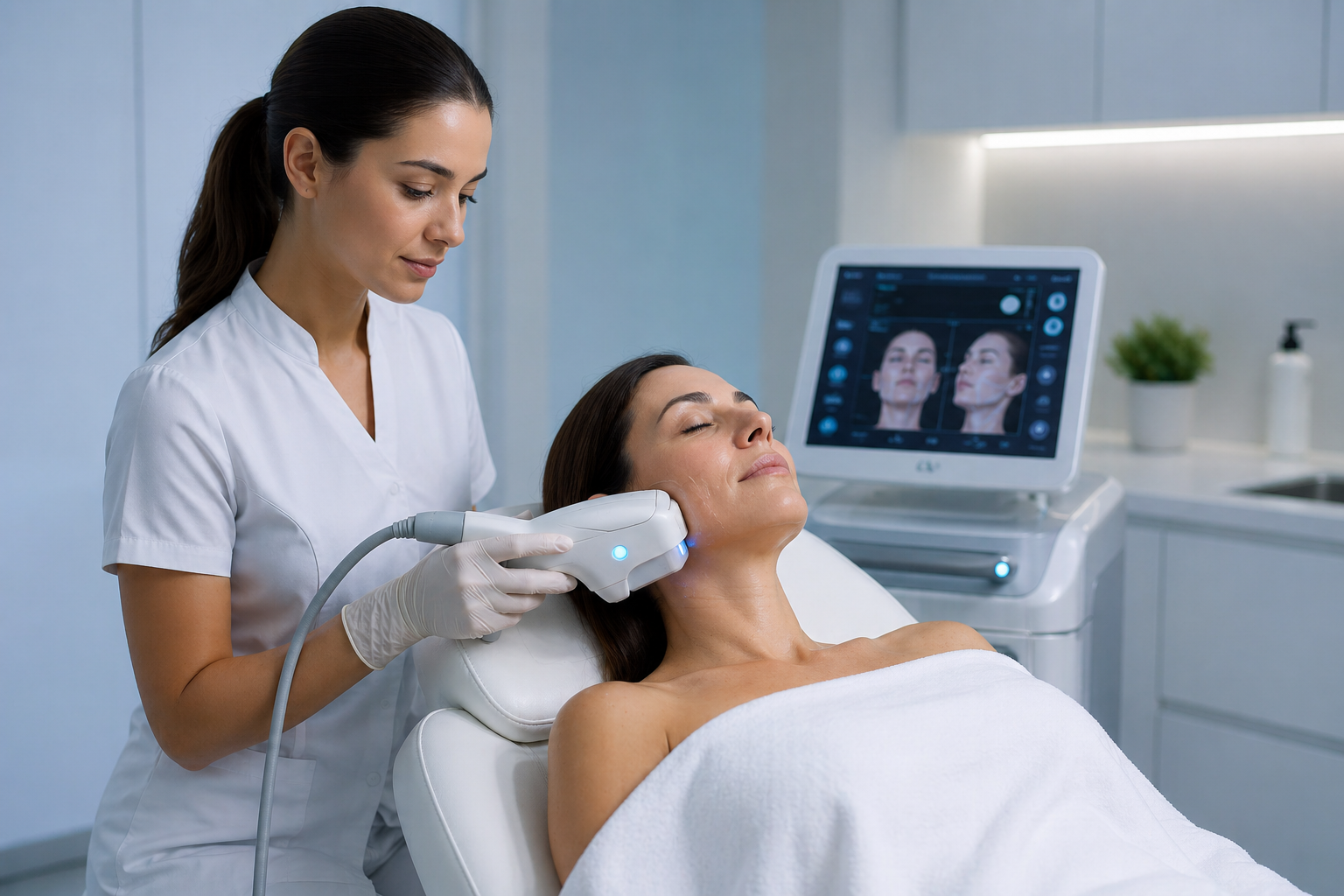
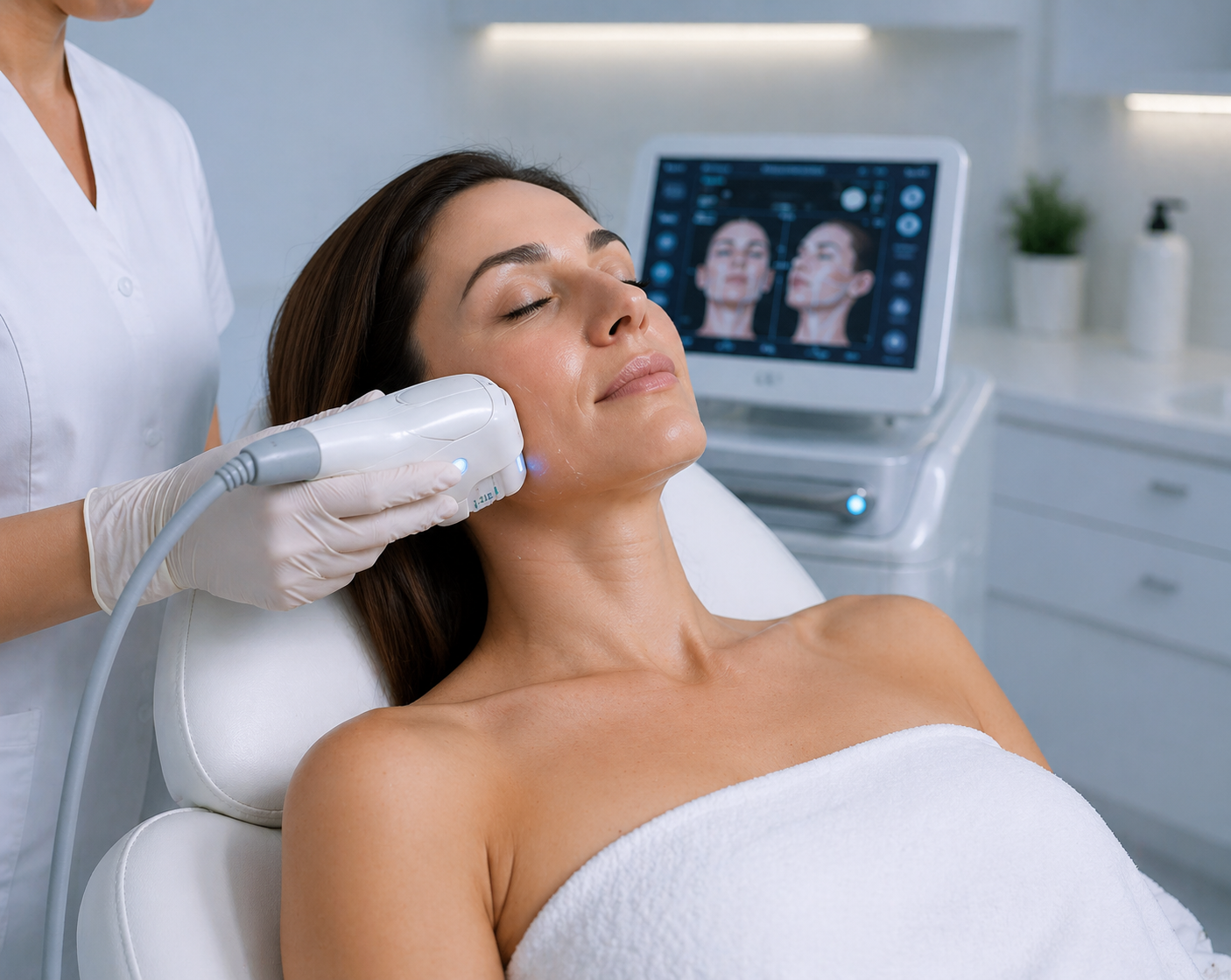
The skin in the treatment area is cleaned, and an ultrasound gel is spread onto it — the same type of gel used during a medical ultrasound. The practitioner then applies the focused ultrasound energy in specific lines across the area being treated using a handheld device. A sensation will be felt when this energy is delivered. Many have described it as a warmth or tingling, sometimes with occasional bursts of more intense heat, especially at deeper energy settings. It is manageable for the vast majority of people. Certain areas are more sensitive than others — the jawline and forehead tend to be the most comfortable, while places closest to bone can feel a little more intense.
The duration of an appointment varies based on the area or areas being treated. A chin and jawline treatment may need twenty to thirty minutes. Forty-five minutes to an hour is the average length of a session for a full face and neck. Body treatments differ for each area.
One of the things people appreciate most about HIFU treatment is that when it is done, it is done. There is no bandage, no complex aftercare protocol and no lengthy list of restrictions. You may experience some mild redness in the area, which typically resolves in one to two hours. Sometimes there is a little soreness that lasts for a day or so, and some tingling. Mild swelling has been reported by some patients, but such occurrences are rare and transient. You can apply makeup, return to work, exercise and continue your everyday life straight away.
Results are where the expectations you set yourself come into play. Some people observe a slight tightening effect almost instantly, especially around the jawline and neck. The more substantial results do not begin to form until one to six months later, when new collagen generation comes into play and fortifies the skin. Over time, the skin tightens, lines become softer and the contour of the face or body improves. It is a process rather than an event, and that is one of its strengths — it looks natural because the change occurs at a natural pace. No one looks at you and immediately senses anything has been done. They just have the impression you are looking well.
While the answer is unique to each individual, this is likely the most practical question anyone thinking about HIFU has, and there are some encouraging general figures to draw upon.
HIFU effects generally last somewhere between six and eighteen months in many people. Certain individuals experience results holding up to as long as two years, especially if they take good care of their skin and follow a healthy lifestyle. The variation is due to age, skin type, initial condition, genetic makeup, sun exposure and other factors like smoking, diet and overall health. Someone in their late thirties with mild laxity and healthy skin will enjoy longer-lasting improvement than someone in their sixties with more advanced skin ageing. That is simply how biology works.
The main point is that HIFU does not reverse the ageing process — nothing can. It does, however, wind back the clock by prompting a significant increase in new collagen production and tightening of structural integrity. The natural ageing process continues after the initial production of collagen, and over time the created collagen will degrade like all collagen types. However, you are starting from a much stronger foundation, so even if the peak results begin to fade, you are still going to look better than had you not had treatment at all.
This is the very reason why many people go for maintenance sessions. Instead of allowing all the results to wear off and starting from scratch, scheduling a follow-up treatment every twelve to eighteen months preserves the collagen growth and keeps tightening steady. The cumulative effect can be significant over time, because each maintenance session builds on the work done in previous treatments. Some practitioners describe it as banking collagen — every session builds up your reserves for the longer term.
HIFU results are also quite resistant to external factors. Since the treatment takes effect in the deeper layers of skin — not at the surface level that goes with other laser or chemical peel treatments — UV exposure does not reverse or negate the effects. However, sensible sun protection is always best for skin overall, regardless of your treatment history.
For those interested in HIFU treatment, one of the most common questions is how it compares to other methods. That is a good question, and the honest answer is that these treatments do different things — HIFU is not necessarily better than everything else, but it fills a niche that no other non-surgical treatment comes close to.
HIFU is, naturally, less invasive than a surgical facelift and far less disruptive to your life. There is no general anaesthesia, no incisions, no stitches and no visible scarring. A surgical facelift may have more dramatic results and last significantly longer — around five to ten years — but it also involves all the risks, costs, and downtime associated with a major surgical procedure. HIFU lives in that space for patients who want a better look but do not feel ready for surgery, or who want to extend the results obtained from previous surgical work.
Botox works entirely differently. It relaxes the muscles that cause frown lines, forehead creases, crow's feet and other expression lines. However, although very effective for what it does, it does not address skin laxity or loss of structural firmness. Botox and HIFU are actually quite a good match. Botox smooths the dynamic lines caused by repeated facial movement, while HIFU takes care of the tightening and lifting. Both are commonly used by people as part of a more comprehensive treatment plan.
Fillers add volume and do not tighten. They are ideal for replacing volume deficiencies in the cheeks, adding fullness to nasolabial folds, or augmenting lip enhancement. Yet again, they are targeting a different concern than HIFU. Fillers add back volume, while HIFU lifts and tightens. The two work well together in order to address several signs of ageing simultaneously — tightening the structural framework with HIFU and restoring strategic volume through dermal fillers.
Laser treatments penetrate the upper layers of skin. They are excellent for skin texture, pigmentation, scarring and surface-level collagen. However, they do not penetrate deep enough to reach the SMAS layer targeted by HIFU. If a patient is primarily concerned with skin texture and tone, a laser may be the best option. If the concerns are mostly with sagging and loss of definition, HIFU is likely the better choice. The two can also be combined — HIFU tightens from deep down and laser refines the surface.
Chemical peels act on the outermost layers of the skin and allow improvements in texture, brightness and pigmentation through controlled exfoliation. They work well for surface resurfacing but do little for deeper tissue laxity. Radiofrequency delivers heat energy to the skin to build collagen, but it typically does not penetrate as deeply as HIFU. While radiofrequency works well for minor skin tightening and texture improvements, when you want more substantial lifting — especially along the jawline and neck — HIFU is generally going to achieve a greater impact, as it reaches the SMAS layer.
This does not mean that HIFU is the only approach to ever be considered. It is that HIFU does what no other non-surgical treatment can — penetrate the deepest structural layer of skin and initiate genuine lifting from inside. On its own, it works well for a wide range of concerns. For some, it produces the best results when combined with other treatments in a complementary manner.
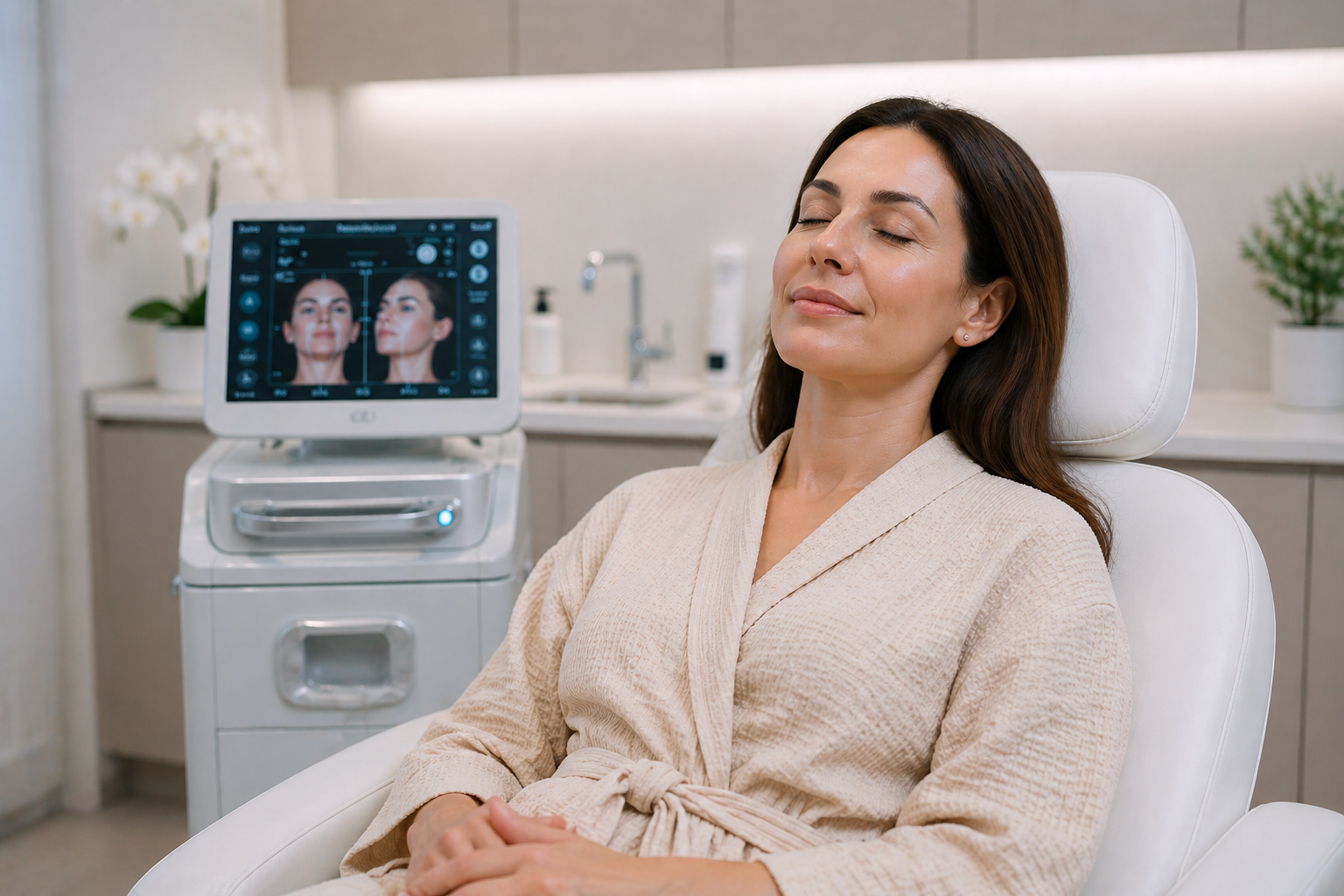
If you put together everything that HIFU treatment demonstrates, it is easy to understand why it has become one of the most popular non-surgical aesthetic treatments available. The benefits go deeper than just what you can see — the whole process, from beginning to end, is designed for minimal disruption and worry.
First and foremost, the greatest benefit is that it is entirely non-invasive. No incisions, no needles, no anaesthesia and no stitches. This is a significant advantage for anyone who feels anxious about invasive procedures — or those who simply do not have the time to spend recovering. You do not need someone to drive you home. You do not need time off work. There is no need to explain bruises or dressings to colleagues or friends. You have the treatment and you get on with your life.
The zero downtime is closely related to that. Expect weeks of recovery with a surgical facelift. After HIFU, an hour of mild redness may follow. That really is all there is to it for the vast majority of people. Its accessibility is a quality that surgical options simply cannot match — you can have the treatment over a lunch break and go back to your desk afterwards.
The results, while not as aggressive as surgery, do show tangible improvement. The skin truly does get firmer, tighter and more lifted as new collagen forms in the weeks following treatment. Because the results take time to develop, they appear completely natural. No one notices anything dramatic — no transformations that announce to the world that you have undergone a cosmetic procedure. People simply notice you look well. Perhaps someone tells you that you appear refreshed, or that something is different — in an admiring way. That is the kind of result most people want.
HIFU treatment is remarkably versatile. It is applicable to nearly all facial and body areas, and by varying the treatment parameters, it can be tailored for various skin types, laxity levels and treatment goals. The method can be customised whether you need a small accent or a larger boost.
The safety profile is another significant advantage. The medical application of HIFU technology has been extensively clinically researched over decades. Concentrated and focused ultrasound energy affects only the intended area at a specific tissue depth, which protects the skin surface completely. Side effects are minimal and temporary, such as minor redness or tenderness that usually lasts less than a few hours.
Those who have previously undergone cosmetic surgery can use HIFU treatment to prolong the effects. Surgical facelifts tend to loosen over time, and instead of having surgery again, HIFU can reinvigorate collagen production and restore some of the tightening effect. It is a practical, low-risk and less expensive means to extend your investment in surgical work.
Lastly, since HIFU helps the body produce its own natural collagen, improvement is observed from within. You are not introducing foreign substances into your face or body. You are simply encouraging your own biology to do what it does naturally — just more effectively than it would on its own at this life stage. There is a quiet appeal in that.
The truthful answer is that it is not painless, but absolutely manageable. The sensation is best described by most as a warmth, tingling or prickling. When the energy is delivered at deeper settings, there may be short periods of sharper sensation, especially over bony areas such as the forehead or jawline. But these are short-lived — each time the device pulses, they last for only a split second. The discomfort is, for the most part, well within tolerance and no anaesthesia or numbing cream is needed, although a topical numbing agent can be offered by some practitioners if you are particularly sensitive.
Most people can see results with just one session. The effects appear progressively in the coming months as collagen production increases. Certain patients with more advanced laxity may benefit from a second treatment three to six months after the initial session. After that, the ideal maintenance sessions to preserve results are usually once a year or every eighteen months. Your practitioner will recommend an optimal routine tailored to your skin type and goals.
Absolutely. In fact, most practitioners suggest integrating HIFU with other procedures for a fuller effect. HIFU works beautifully alongside Botox, dermal fillers, chemical peels and laser treatments because each has a different focus area concerning skin ageing. When it comes to treatment, timing is everything — your practitioner will guide you through the sequence of treatments that will yield the best outcome while avoiding any unnecessary discomfort.
HIFU treatment poses very minimal risk. The only known side effects are modest redness, slight swelling and brief tenderness in the treated area. These usually resolve within a few hours to a day or two. Extremely rarely, minor tingling or numbness may present in the treated area for a few weeks. If performed by a trained and experienced practitioner, serious side effects are exceptionally rare.
Yes. While some laser treatments carry a risk of pigmentation changes on darker skin tones, HIFU uses ultrasound energy that travels directly beneath the surface of the skin. Because it does not interact with melanin, it is equally safe and effective for all skin tones and types. This is one of the qualities that makes HIFU treatment so inclusive.
A slight tightening effect is noticed immediately after treatment in some individuals, especially in the neck and jawline area. The full results, though, develop over the course of one to six months as the body generates new collagen. This is why the improvements look so natural — because it is a gradual change. Part of the process is allowing time to play its role in your journey.
There are a few contraindications. HIFU is not suitable for pregnant or breastfeeding women, those with active skin infection or open wounds in the treatment area, people with metal implants or electronic devices near the treatment zone, and individuals with specific medical conditions that could affect healing or collagen development. A comprehensive consultation before treatment would flag any potential issues and confirm that the procedure is safe and appropriate for you.
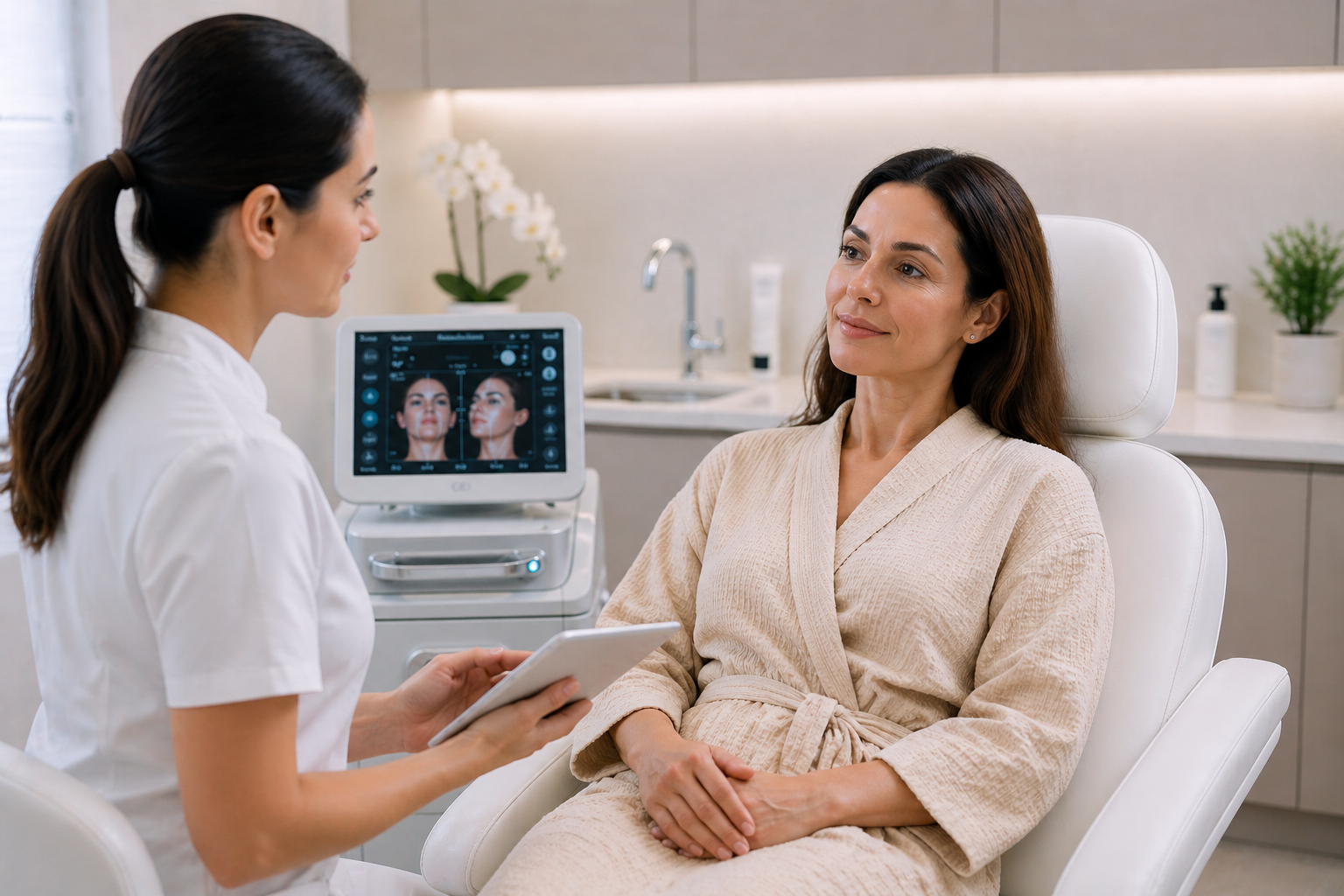
Deciding to have any cosmetic treatment is a very personal choice, and one that deserves careful consideration and reliable information. HIFU treatment offers a genuinely unique proposition in the non-surgical aesthetics space — reaching deeper than any other non-invasive technology, stimulating the body's own natural healing and collagen production system, and delivering actual visible results that build naturally over time. Whether it is the face, neck or areas of the body, HIFU provides a safe and effective non-invasive solution that offers tighter, smoother and more youthful-looking skin.
The best approach is to take your own time. Read about the treatment. Understand what it can and cannot do. Ask questions — the right practitioner will welcome them, because informed individuals always make wiser decisions. And when you finally make the choice to move forward, you will know you are selecting a treatment that is grounded in decades of ultrasound science, years of clinical research and the experiences of people around the world who have seen results firsthand.
Your skin tells your story. HIFU treatment simply helps it tell a fresher one.